

Every spring, the Tet holiday feast stands as a beautiful cultural symbol intimately linked with the Vietnamese tradition of family reunions. So, what do Vietnamese people typically eat during Tet to wish for good luck, prosperity, and an abundant new year? Join us in exploring the signature Tet dishes across the three regions and uncover the special meanings behind each dish in the article below.
The Significance of Tet Dishes in Vietnamese Culture
Far more than just delicious food to welcome guests or celebrate family gatherings, Tet holiday dishes embody rich cultural values and heartfelt wishes for the new year. Each dish carries its own unique meaning, contributing to the completeness of a traditional Vietnamese Tet feast.
- Expressing gratitude to ancestors: The Tet feast serves as sacred offerings presented to grandparents and ancestors, honoring the nation’s enduring moral principle of “drinking water, remembering the source.”
- Wishing for good luck and prosperity: Many dishes feature colors, shapes, or names that symbolize abundance, peace, and good fortune in the year ahead.
- Strengthening family bonds: Preparing and savoring Tet meals together offers family members a cherished opportunity to gather and share the joy of early spring.
- Preserving regional culinary identities: Although popular Tet foods differ among the Northern, Central, and Southern regions, each dish mirrors the distinct customs and cultural heritage of its locality.
- Delivering a balanced and harmonious meal: A festive Tet feast combines savory, pickled, sticky rice, and vegetable dishes, creating a vibrant flavor palette while preventing any greasy or heavy feeling during the initial days of the year.
A Culinary Tour of Traditional Vietnamese Tet Dishes by Region
Every region boasts signature Tet dishes infused with distinct flavors and symbolism, together shaping Vietnam’s multifaceted culinary identity. If you are wondering what Vietnamese people typically enjoy during Tet, here are the essential traditional delicacies gracing festive banquet tables at the turn of the new year.
Traditional Tet Flavors of Northern Vietnam
The Northern Tet feast is steeped in centuries-old traditions passed down through generations. Beyond their enticing flavors, each dish is closely tied to customs, beliefs, and propitious blessings for the new year.
Banh Chung (Square Sticky Rice Cake)
Banh chung is an indispensable staple on any Northern Tet feast table, tracing its roots back to the legend of Lang Lieu and symbolizing the Earth. Wrapped neatly in phrynium leaves (la dong), it combines glutinous rice, mung beans, and seasoned pork, then simmers gently for hours to achieve a sticky, fragrant texture. More than just a hearty meal, banh chung conveys profound reverence toward ancestors along with hopes for an abundant, prosperous new year.

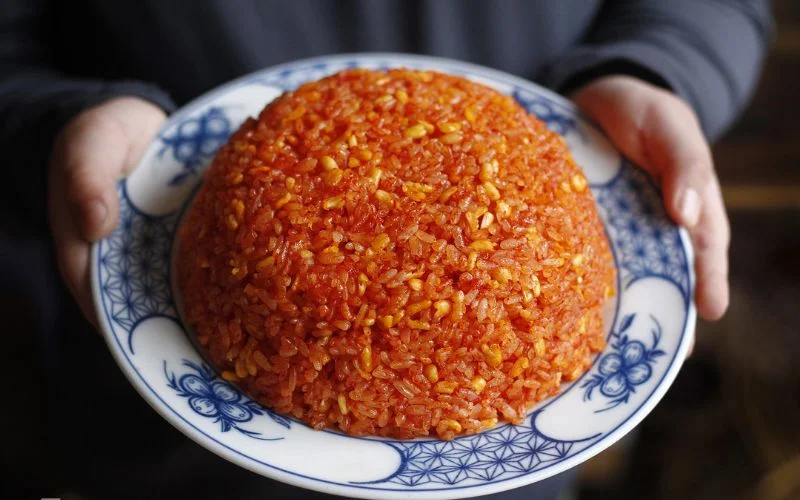
Xoi Gac (Red Sticky Rice)
Xoi gac captivates with its brilliant natural red hue, an auspicious symbol of luck, wealth, and happiness in the new year. Prepared by infusing glutinous rice with ripe gac fruit pulp, it is an essential offering on ancestral altars. With its fragrant taste and symbolic fortune, red sticky rice ranks among the most familiar traditional Tet dishes across the North.
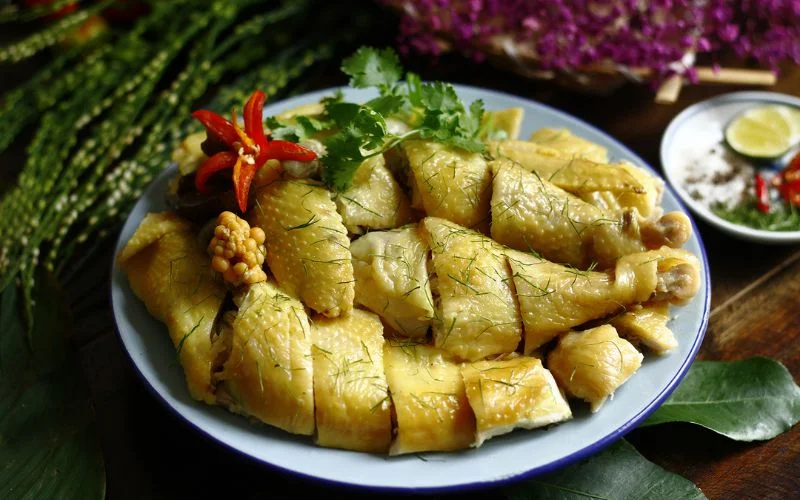
Ga Luoc (Boiled Chicken)
Boiled whole chicken is a vital ceremonial offering during New Year’s Eve (Giao Thua) and the first day of Tet in many households. Vietnamese families traditionally select a handsome rooster to pray for a smooth beginning, tranquility, and fortune. The tender, naturally sweet meat and glistening golden skin not only elevate the aesthetic presentation of the festive spread but also foster a warm celebratory ambiance.
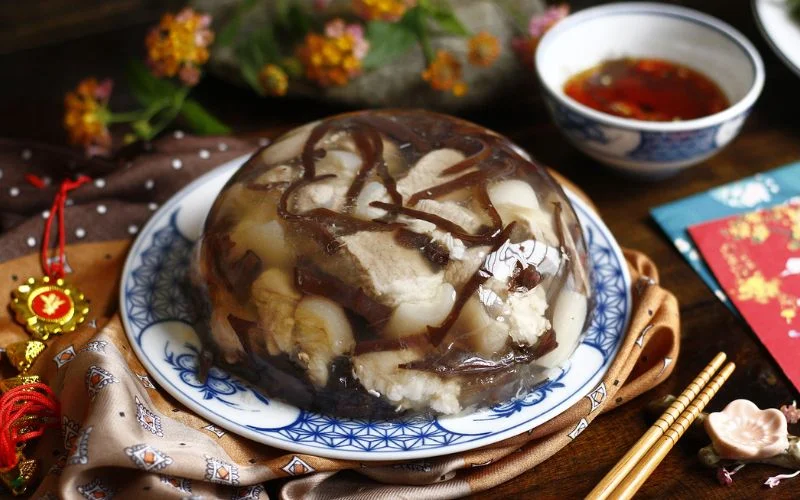
Thit Dong (Jellied Pork / Asipic)
Thit dong is best enjoyed in crisp, chilly weather, making it a classic hallmark of Northern Tet festivities. The dish is cooked by gently simmering pork trotters or chicken with pork skin, wood ear mushrooms, and shiitake mushrooms until tender, allowing the collagen-rich broth to cool and set into a delicate, clear jelly. The rich savoriness of the meat pairs harmoniously with the crunchy skin and aromatic mushrooms, delivering a refreshing, non-greasy palate sensation.
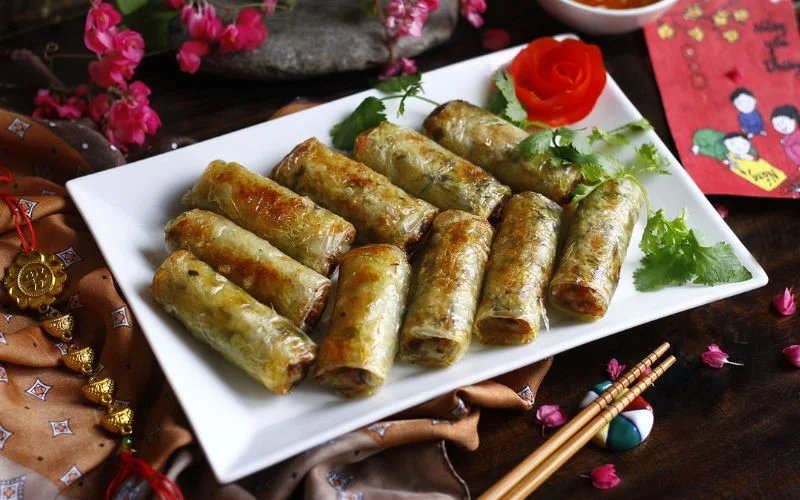
Nem Ran (Crispy Fried Spring Rolls)
Nem ran is a staple found across virtually every Northern Tet feast table, universally adored by kids and adults alike. The filling typically blends minced pork, shrimp, glass noodles, wood ear mushrooms, shiitake, carrots, and eggs, meticulously rolled in rice paper wrappers and fried to a crunchy golden brown. Served with fresh herbs and a sweet-and-sour dipping fish sauce, this dish symbolizes unity and plenitude through its rich assembly of diverse ingredients folded neatly into one harmonious roll.
Dua Hanh (Pickled Small Onions)
For generations, pickled onions have been a cornerstone of Tet cuisine, immortalized in the famous folk couplet: “Fatty pork, pickled onions, red parallel couplets.” Dua hanh is made by brining purple or white small shallots/onions in salt, vinegar, and sugar over several days until crisp with a mild, pleasant acidity. Despite its humble nature, it plays a vital role in balancing rich culinary flavors, particularly when accompanied by banh chung, jellied meat, or Vietnamese pork ham (gio lua).

Flavorful Central Vietnamese Tet Delicacies
Central Vietnamese cooks are celebrated for their meticulous craft, ensuring the holiday feast achieves an exquisite harmony between rich flavors and cultural reverence. Many dishes are prepared days in advance, serving both as offerings to ancestors and as hospitable treats to entertain guests in the opening days of spring.
Banh Tet (Cylindrical Sticky Rice Cake)
While banh chung represents Northern Tet, banh tet is the quintessential symbol of spring in Central Vietnam. These vibrant green cylindrical cakes are wrapped in banana leaves, encasing sticky glutinous rice, mung bean paste, and melt-in-the-mouth pork belly, lovingly boiled by families days before the festival. Its elongated cylindrical form symbolizes wholeness, connection, and life’s enduring cycle. Sliced into neat circular discs, banh tet is offered upon altars or enjoyed alongside pickled vegetables and fish-sauce-marinated pork.

Thit Heo Ngam Nuoc Mam (Pork Soaked in Fish Sauce)
Pork soaked in fish sauce showcases the resourcefulness and culinary ingenuity of Central women during Tet. Due to historic climatic conditions and preserved culinary habits, locals created long-lasting dishes that remained fresh across several holiday days. Boiled pork slices are steeped in a robust sweet-and-savory fish sauce syrup, delivering an appetizing profile that pairs beautifully with banh tet, pickled vegetables, or fresh herbs.

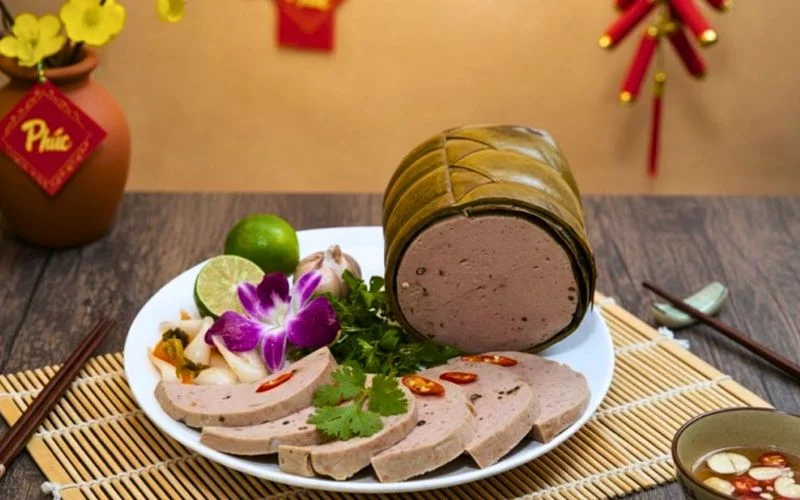
Cha Bo (Beef Sausage / Ham)
Cha bo graces Central holiday tables across everyday family meals and formal party banquets alike. Crafting premium beef sausage demands prime fresh beef, finely minced or pounded and seasoned to perfection to produce a springy, pleasantly aromatic bite. Beyond its delightful taste, cha bo conveys wishes for prosperity, wellbeing, and wealth throughout the incoming year.
Nem Chua (Fermented Pork Rolls)
Nem chua is a familiar accompaniment to lively spring chats and convivial gatherings in Central Vietnam. Made from simple ingredients like lean pork, pork skin, garlic, and chili transformed through natural fermentation, it delivers a distinctly tangy, subtly spicy, and fragrant punch. Serving as both a zesty Tet appetizer and an iconic culinary staple, nem chua highlights the nuanced identity of Central gastronomy.

Tom Chua (Hue Pickled Fermented Shrimp)
When thinking of Central cuisine—especially imperial Hue—tom chua stands out as an emblem of delicate sophistication. Fresh whole shrimps are cured with galangal, garlic, chili, and regional seasoning, turning an appetizing vermilion red with a delightfully balanced taste. Enjoyed with boiled pork belly and fresh greens, tom chua conveys warm hopes for vibrant fortune and prosperity.

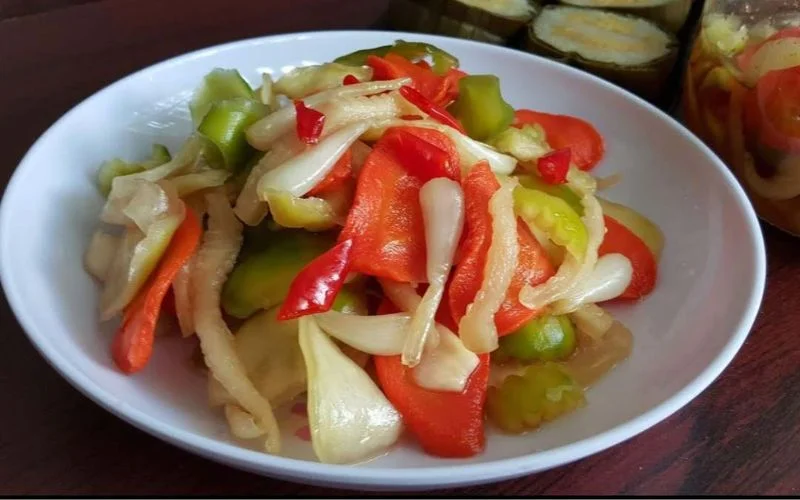
Dua Mon (Sun-Dried Pickled Vegetables)
Dua mon reflects the resourceful creativity of Central cooks, who take everyday root vegetables and transform them into a dedicated Tet accompaniment. Green papaya, carrots, and daikon radish are sun-dried, then cured in seasoned fish sauce to yield a crunchy, sweet-and-savory condiment that cuts through protein-heavy dishes. Unpretentious yet indispensable, dua mon remains an essential touch on the traditional table.
The Bountiful and Abundant Southern Tet Banquet
The Southern Tet table mirrors the fertile, generous nature of the southern lands, presenting bold, hearty dishes that are easy to savor and simple to keep over many days. Every preparation carries blessings for a prosperous, fulfilling, and fortune-filled new year.
Thit Kho Nuoc Dua / Thit Kho Tau (Caramelized Pork Braised in Coconut Water)
Traditionally, in the days leading up to Tet, southern families braise a large pot of pork to enjoy across the festive week, offering convenience and representing wealth. Large square pieces of pork paired with whole round eggs symbolize wholeness and completeness. The tender melt of braised meat enriched with the natural sweetness of fresh coconut water defines the nostalgic taste of Tet across the South.

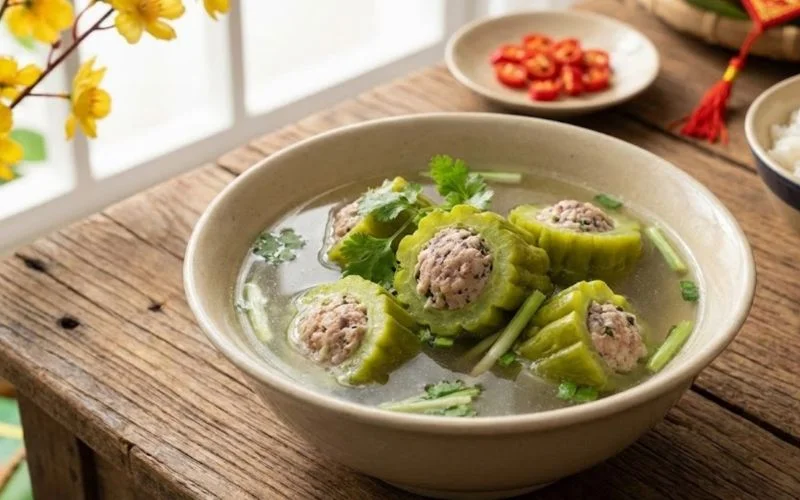
Canh Kho Qua Nhoi Thit (Stuffed Bitter Melon Soup)
Stuffed bitter melon soup carries poetic wordplay in Southern cultural tradition: “kho qua” literally translates to “hardships have passed.” People savor this dish at the start of the year in the belief that all difficulties and trials will fade away, making room for smoother blessings. Hollowed bitter melons are filled with seasoned ground pork and simmered in a clear, sweet broth, serving both as a refreshing soup and a wish for tranquility and good fortune.
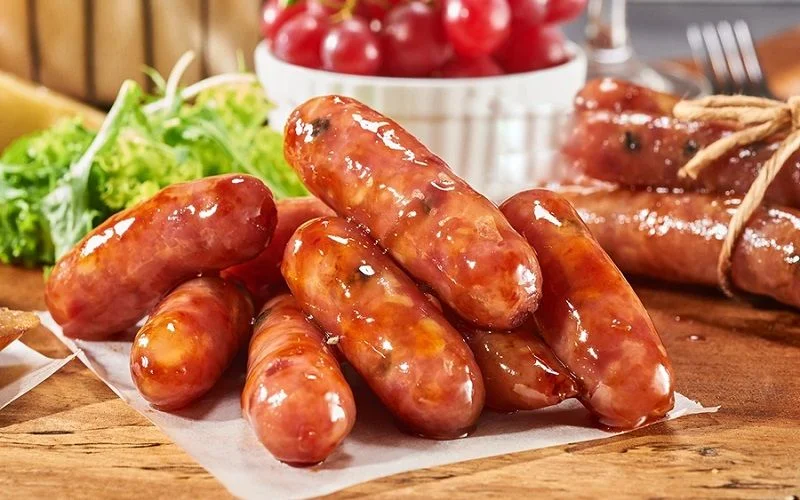
Lap Xuong (Chinese-Style Dried Sausages)
Lap xuong is an ever-present staple in many Southern homes during the Lunar New Year. In past times, families would dry strings of bright sausages in front of their homes prior to Tet to serve visiting guests and dine on during the festival. With their vivid reddish-pink tone, these sausages are regarded as tokens of fortune, wealth, and prosperity. Whether fried, grilled, or paired with rice dishes, they enrich the festive feast.
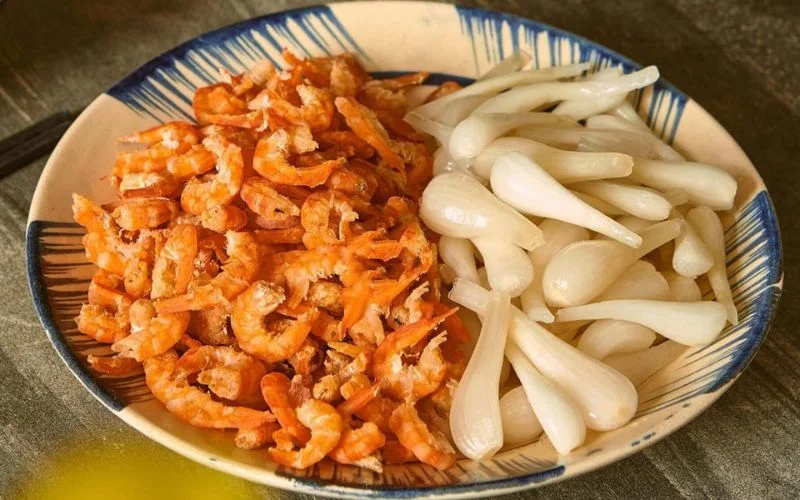
Cu Kieu Tom Kho (Pickled Scallion Heads with Dried Shrimp)
Pickled scallion heads with dried shrimp is a rustic yet quintessential classic of Southern festive cuisine. Combining sweet-and-sour pickled Chinese scallion bulbs with chewy, savory dried shrimp, this pairing yields a palate-cleansing crunch full of homey nostalgia. In addition to balancing out braised pork and banh tet, jars of homemade cu kieu prepared days in advance evoke the hallmark spirit of Tet.
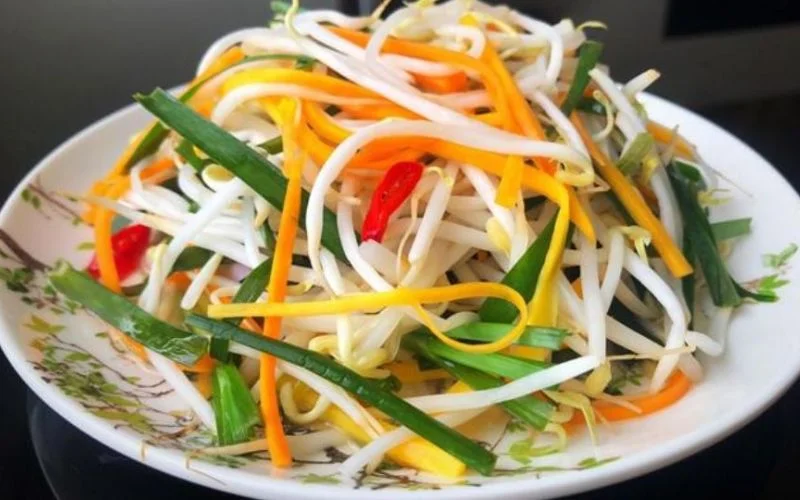
Dua Gia (Pickled Bean Sprouts)
Dua gia is an unpretentious, crisp side dish present in many Southern family banquets. Prepared from fresh bean sprouts, Chinese chives, and carrots lightly pickled in vinegar and brine, it provides a cooling, crisp contrast against heavier options like caramelized pork and sausages. In Southern food culture, pickled bean sprouts illustrate how modest ingredients can be orchestrated into a wonderfully balanced, complete holiday meal.
Tips for Preparing Simple Yet Authentic Tet Dishes
You don’t need overly complicated steps or endless hours to prepare a Tet meal that remains true to authentic traditional flavors. By planning ahead, choosing fresh ingredients, and leveraging smart cooking techniques, your holiday spread will be both bountiful and effortless.
- Prepare ingredients in advance: Shop for and prep staples like glutinous rice, mung beans, meats, and vegetables a few days ahead to avoid holiday rushes and price spikes.
- Prioritize dishes that can be cooked ahead: Banh chung, banh tet, braised pork, marinated pork, pickled onions, and dried pickled vegetables can easily be crafted 2–7 days in advance while retaining peak flavor.
- Make good use of modern kitchen appliances: Using pressure cookers for braising meats, air fryers for crisp spring rolls, or ovens for select dishes can dramatically save kitchen time.
- Store food properly: Portion meals into smaller airtight containers and store them at appropriate temperatures to keep dishes fresh and flavorful throughout the holiday week.
- Design a balanced, moderate menu: Rather than overpreparing too many items, select familiar, complementary staples to reduce food waste while keeping the family banquet complete and appetizing.
Conclusion
We hope this article has provided a clear glimpse into what Vietnamese people eat during Tet and the heartfelt stories behind each culinary tradition. If you wish to experience traditional Vietnamese flavors reimagined in a contemporary style, visit Madame Lam to explore the quintessence of Vietnamese cuisine in an elegant and captivating ambiance.
Madame Lam Restaurant
- Address: No. 10 Tran Ngoc Dien, Thu Duc City, Ho Chi Minh City
- Hotline: 070 322 6262
- Email: booking.mdl@mamamia.vn
- Website: https://madamelam.com/
- Fanpage: https://www.facebook.com/MadameLamRestaurant/
- TikTok: https://www.tiktok.com/@madamelamvn
- Tripadvisor: https://www.tripadvisor.com/Restaurant_Review-g293925-d24053236-Reviews-Madame_Lam_Vietnamese_Contemporary_Cuisine-Ho_Chi_Minh_City.html
- YouTube: https://www.youtube.com/@madamelamvn
- X: https://x.com/madamelamvn
- Tumblr: https://www.tumblr.com/madamelamvn
- Reddit: https://www.reddit.com/user/madamelamvn/
- Twitch: https://www.reddit.com/user/madamelamvn/
- LinkedIn: https://www.linkedin.com/in/madamelamvn/
- Pinterest: https://www.pinterest.com/madamelamvn/
- Flipboard: https://flipboard.com/@madamelamvn
- Scoop.it: https://www.scoop.it/u/madamelamvn
- Instapaper: https://www.instapaper.com/p/madamelamvn
- Vimeo: https://vimeo.com/madamelamvn
- Dribbble: https://dribbble.com/madamelamvn