

Bun Bo Hue has long crossed beyond the boundaries of the ancient imperial capital to become a beloved staple for diners across Vietnam. Despite its nationwide popularity, the true origins of Bun Bo Hue remain deeply intertwined with the unique culinary heritage of Hue—from its thick rice vermicelli and rich broth to the bold taste of fermented shrimp paste (mắm ruốc). Let’s explore the origins, evolution, and key characteristics that have defined this iconic specialty.
Where Did Bun Bo Hue Originate?
To date, no official historical records clearly define the exact time Bun Bo Hue was created; its history lives on primarily through hypotheses and folklore passed down through generations. One popular theory suggests that the dish gradually took shape during the Nguyen Dynasty, a period marked by rich interactions between sophisticated imperial court cuisine and everyday folk traditions.
According to folklore recounted by Hue Folk Culinary Artisan Mai Thi Tra at an ancient capital culinary heritage seminar, Bun Bo likely originated from ancient village sacrificial rituals. Following ceremonies dedicated to the deities, the sacrificial beef was typically simmered into a rich broth to be served with sticky rice as a ritual blessing (thụ lộc). As artisanal vermicelli-making crafts—most notably from the ancient Van Cu village—flourished and integrated into daily life, locals replaced sticky rice with rice noodles to create a lighter, more convenient way to enjoy the broth. Nonetheless, this remains a folk legend explaining the dish’s origin rather than a verified historical fact.
The Formation and Evolution of Bun Bo Hue
From folk legends to its foundational ingredients, the evolution of Bun Bo Hue can be viewed through three distinct stages closely tied to life in Hue:
Laying the Foundation from a Traditional Vermicelli Village (Around the 16th Century)
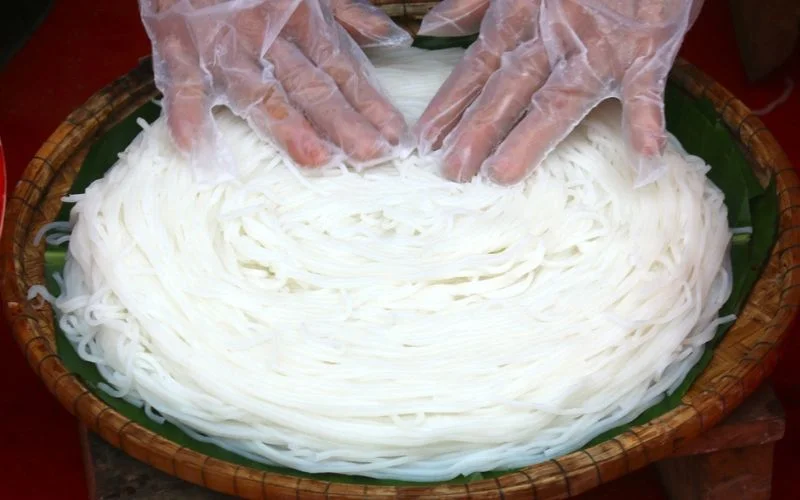
According to the Monograph of Thua Thien Hue (Traditional Craft Villages section), the craft of making rice noodles in Van Cu village (Huong Toan commune, Huong Tra town) was established during the reign of Lord Nguyen Hoang, accredited to Ms. Bui Thi Dien (folk-revered as “Ba Bun” or “Mother of Vermicelli”). The craft of making thick, translucent, chewy fresh rice noodles from local rice provided the quintessential ingredient, paving the way for the local noodle soups to take shape and evolve.
Taking Shape Through Street Vendors (Early 20th Century)
According to accounts of urban life in ancient Hue, Bun Bo gradually became a fixture of daily living through the shoulder-pole baskets carried by local women weaving through the Citadel and Dong Ba Market. During this period, the dish was rustic and delicate: the beef bone broth was carefully clarified, gently fragrant with bruised lemongrass stalks and settled shrimp paste extract, and served with a modest portion of beef alongside shredded banana blossom herbs, epitomizing the refined dining habits of imperial city residents.
Expansion and Diversification (From the Mid-20th Century to Present)
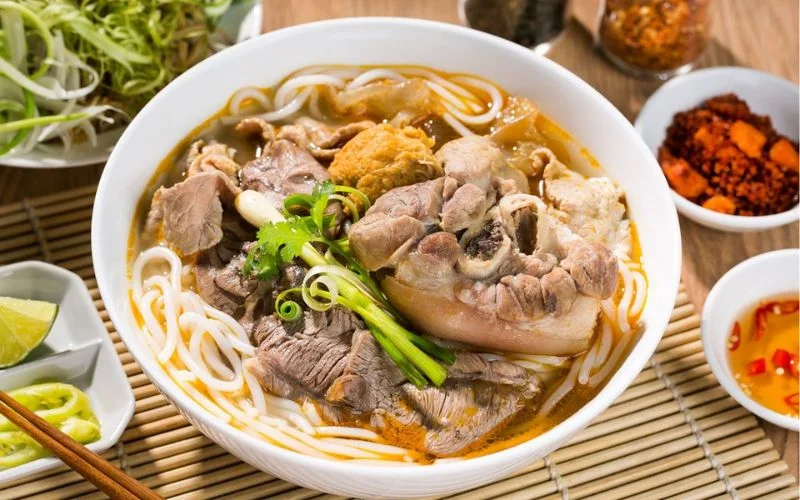
As the economy developed and cultural exchanges expanded across regions, Bun Bo ventured beyond the Ancient Capital to become popular throughout all three regions of Vietnam. Over time, bowls were enriched with a variety of toppings such as pork knuckles, congealed pork blood cubes, crab patties, and beef patties. Simultaneously, cooks adapted the spiciness, sweetness, and accompanying fresh herb platters to suit the diverse palates of diners everywhere.
What Are the Distinctive Features of Bun Bo Hue?
The defining characteristics of Bun Bo Hue were shaped over centuries of culinary evolution in the imperial capital. Therefore, exploring its origins requires not only examining the folklore of its birth but also looking into the unique ingredients that establish its culinary identity.
Hue Rice Vermicelli
Van Cu village in Hue is renowned for its centuries-old vermicelli-making tradition, supplying the staple ingredient for numerous local delicacies, including Bun Bo. These noodles are typically pure white, offering an ideal balance of tenderness and chewiness that pairs perfectly with piping hot broth.
The Broth of Bun Bo Hue
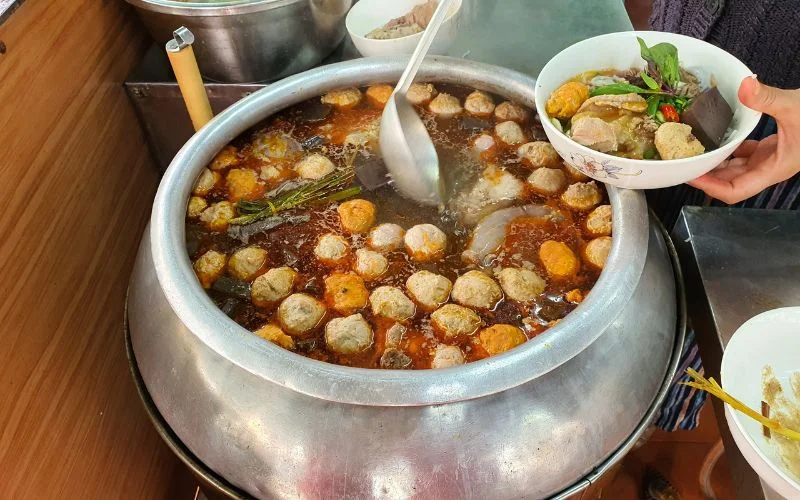
The broth is the hallmark of Bun Bo Hue preparation. In accordance with traditional recipes passed down through generations in Hue, beef bones are prepared and simmered over low heat to extract their natural sweetness, with scum skimmed regularly to keep the broth clear. Lemongrass and fermented shrimp paste (mắm ruốc) are two essential seasonings that lend the dish its signature aroma and profile. The shrimp paste is usually diluted with water and filtered for its clear extract before being added to the pot, infusing a deep, savory richness without overpowering pungent notes.
Beef, Pork Knuckle, and Various Toppings
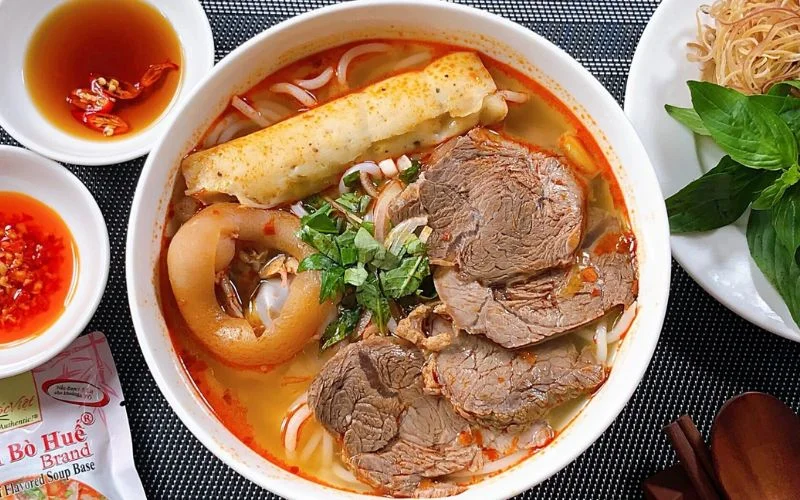
A bowl of Bun Bo Hue typically features beef shank or flank, pork knuckle, and congealed blood cubes, delivering a rich variety of textures and flavors. Depending on regional variations, toppings may vary, yet this core combination remains central to the identity rooted in Bun Bo Hue’s origins.
Fresh Herbs and Condiments
Bun Bo Hue is typically served with fresh herbs and condiments such as lime wedges, chili, fish sauce, or chili sauce to suit personal preferences. In particular, fiery spiciness is a defining trait often associated with the flavor profile of Bun Bo Hue, derived from sautéed chili oil (sa tế), chili paste, or fresh chilies. However, the heat level can vary across different eateries and can be customized according to each cook’s approach.
How Does the Original Bun Bo Hue Differ Across Regions?
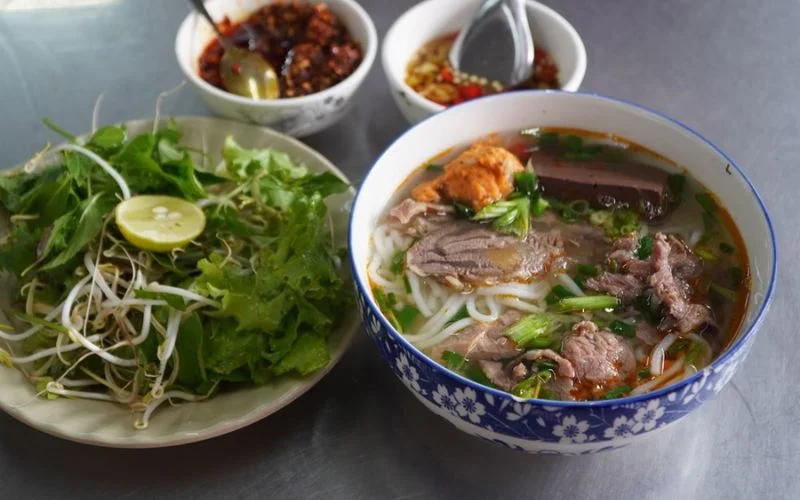
As Bun Bo spread to various regions, it underwent specific adaptations to harmonize with local ingredients and regional taste profiles. These nuances highlight the distinct character of the noodle soup in each part of the country.
Bun Bo in the Imperial Capital
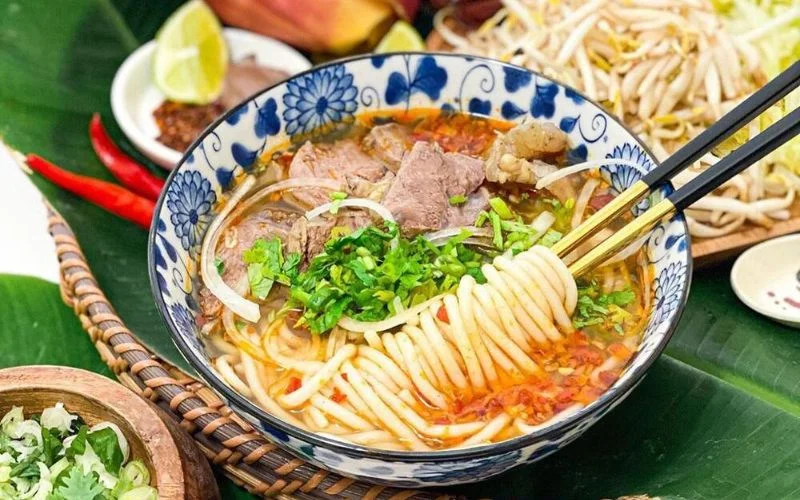
In Hue, Bun Bo is an essential part of the local daily lifestyle. The dish stands out for its savory broth, rich aroma of fresh lemongrass stalks, delicate undertones of shrimp paste, and distinctive spicy kick.
A bowl served in Hue today typically uses thick, tender rice noodles combined with staples such as beef shank, pork knuckle, congealed blood cubes, and crab or beef patties depending on the shop. It is invariably accompanied by a platter of fresh vegetables featuring finely shredded banana blossom, bean sprouts, lime, and pickled chilies for diners to customize to their taste. The harmony of natural bone-broth sweetness and local native seasonings creates an unmistakable flavor unique to the Imperial Capital.
The Northern Interpretation
Upon introduction to Northern Vietnam, the dish was flexibly adjusted by cooks to better fit local culinary habits. The broth leans lighter and clearer, while the pungent flavors of fermented shrimp paste, lemongrass, and fiery chilies are notably subdued. Accompaniments like beef cuts, pork knuckle, or herbs may also vary from stall to stall. Rather than forming a new official variation, these modifications simply balance seasonings to make Bun Bo more approachable to Northern palates.
The Southern Style
When arriving in the South, Bun Bo was further adapted in both seasoning and ingredients to align with southern tastes. The broth is typically richer and distinctly sweeter, the spiciness is dialed down, and the accompanying plate of fresh herbs is much more lavish and diverse, true to southern dining customs for noodle soups. This represents a natural culinary evolution that has allowed Bun Bo to seamlessly integrate into local food culture.
Why Has Bun Bo Hue Remained Beloved Across Generations?
From rustic street-vendor baskets in Hue, this dish has grown into a cherished favorite for generations of families. The enduring appeal of Bun Bo Hue stems not only from its captivating flavor, but also from the cultural values deeply rooted in Hue’s culinary heritage:
- Distinctive flavor: A savory, aromatic broth infused with lemongrass, shrimp paste, and signature heat.
- Abundant ingredients: A hearty bowl combining beef shank, pork knuckle, and blood cubes with fresh herbs and vibrant spices; depending on regional tastes, vendors often add crab patties, beef patties, or Vietnamese pork roll (chả lụa).
- Deep cultural connection: Bun Bo was once ubiquitous on the shoulder-poles of wandering street vendors, remaining a beloved cornerstone of everyday life for Hue residents.
- Customizable to taste: Spiciness, shrimp paste intensity, and toppings can easily be adjusted to personal preferences.
- Widespread popularity: The dish is widely available across Vietnam and proudly featured in Vietnamese restaurants worldwide.
Conclusion
We hope the information above has provided deeper insights into the origins of Bun Bo Hue and why this dish has become such an enduring icon of Vietnamese gastronomy. If you ever visit Hue, don’t miss the chance to savor a bowl of Bun Bo to experience its authentic, signature flavors right in the land that gave it its name.
Madame Lam Restaurant
- Address: 10 Tran Ngoc Dien, Thu Duc, Ho Chi Minh City
- Hotline: 070 322 6262
- Email: booking.mdl@mamamia.vn
- Website: https://madamelam.com/
- Fanpage: https://www.facebook.com/MadameLamRestaurant/
- TikTok: https://www.tiktok.com/@madamelamvn
- TripAdvisor: https://www.tripadvisor.com/Restaurant_Review-g293925-d24053236-Reviews-Madame_Lam_Vietnamese_Contemporary_Cuisine-Ho_Chi_Minh_City.html
- YouTube: https://www.youtube.com/@madamelamvn
- X: https://x.com/madamelamvn
- Tumblr: https://www.tumblr.com/madamelamvn
- Reddit: https://www.reddit.com/user/madamelamvn/
- Twitch: https://www.reddit.com/user/madamelamvn/
- LinkedIn: https://www.linkedin.com/in/madamelamvn/
- Pinterest: https://www.pinterest.com/madamelamvn/
- Flipboard: https://flipboard.com/@madamelamvn
- Scoop.it: https://www.scoop.it/u/madamelamvn
- Instapaper: https://www.instapaper.com/p/madamelamvn
- Vimeo: https://vimeo.com/madamelamvn
- Dribbble: https://dribbble.com/madamelamvn